Thursday, 30 June 2016

London 2 Cardiff 24 team relay challenge 160 miles

London 2 Cardiff 24 team relay challenge 160 miles

One of my friends asked me if I would be interested in a running event called London 2 Cardiff 24 team relay challenge. In the past I did several challenges but not like this one. So I've signed up with Honda Runners Team. Our team included 14 people (Emma, Vicki, Rosa, Hayleigh, Andrea, Shannon, James, Mark, Toby, Dave, Gaz, Stuart, Shaun and myself Karin)

Two weeks before the challenge we received all instructions we needed, for example starting time, the routes, checkpoints and safety. I took the opportunity and I went to check my routes before hand so it will be easier for me on the day of the event. There were 24 stages (checkpoints) with different lengths between them (3 to 13 miles). We had 3 team runs which we ran together from the beginning, in the middle of the 160 miles and at the finish. Each route had two difficulties of route, red and green. The green route you could take any route you liked but with the red route you had to follow in the exact directions as you had been told to do so. 

We set of 10th June 2016 at 5:08 pm from Twickenham in West London. The running route took us along rivers and canals, through forests and towns, across fields, along bridleways and public paths and also over bridges including the Severn Crossing. The terrain varied from tarmac to mud and gravel to long grass. Most of the time we had to go with our instinct especially during the night where is hard to see. Each runner was followed by one cyclist from our team. At the start line we got a GPS tracker the size of a small phone. This is was like a stick which we had to carry and pass to an another runner at the checkpoint. Each checkpoint has a code which we had to remember and call to a central hub. This hub was monitoring us as well as the rest of the teams. This year 34 teams were joining.

                                                                               My first run

As soon as we finished our first team run we (the rest of the team) were quickly moving to another stage by mini bus. My stage was number 3 (8,28 miles long) and 12 (3,66 miles long). Myself and some of my teammates were waiting in the checkpoint number 3. As soon as the runner came, we checked the code and then I shot off. First run was good, nice and sunny but in the middle of the run I was caught in rain. I actually really enjoyed it. It’s always better to run when it's cooler. I was also pleased with my time 1 hour and 10 minutes. The others were waiting in checkpoint 4 with our mini bus. I quickly changed and then we moved to another one. The good thing was if we didn’t run we could talk, rest, sleep, listen to music, eat and support each other. This swapping happened in each checkpoint. We had some stops on the way too where we could top up our nutrition such as pizza, have a cup of tea or coffee or just  have a hot shower. Everything was going smoothly until midnight where we lost a runner. Hub informed us about it by phone. Luckily we could track our GPS too so we could see where our runner is. We followed him and he wisely chose to go to the main road. We kept him company for a bit and waited on the next check point. It was impossible to sleep as adrenaline was kicking in. We were glad that he was ok. Cyclists didn’t go during the night runs as in some places  it was dangerous terrain.We were doing well after this stage where rest of the team managed to run super fast.


                                                                    Emma and Gaz in action

My other run was continued straight after our second team run in Coate Water Country Park around a lake which was 2 miles long. My legs became quite stiff from the beginning. After a while they were behaving better. I did stretch my legs after as much as I could. There was a one thing we didn’t expect, in Cardiff town centre there was a traffic jam and we couldn't reach our last and final stage. We were going on and on in circles but eventually managed to get there. Everyone could see how stressed and nervous we were because we wanted to finish under 24 hours. 

                                                               At the checkpoint after my second run

Our last team run ended up in Sophia Gardens. We crossed the finish line together. We did it in a very good time in fact 23 hours and 21 minutes. We were 11th team which I think is a brilliant result. We also raised money for Great Ormond Street Hospital Charity. Thank you everyone who sponsored us. 

It was such a busy challenge but worth every second! :)

                                                            Dream Team

                                                                 The medal

Monday, 25 April 2016

Windsor Duathlon 2016

When I saw an advertisement about Windsor Duathlon 2016 I decided to take part as I like Windsor for its beauty and lots of greenery. There were two optional disciplines: Sprint distance (5km run, 20 km bike and 2,5 km run) and Olympic distance (10 km run, 40 km bike and 5 km run). I chose to do Sprint distance. 

The event was held in Windsor Great Park next to the Long Walk for the first time ever organised by British Triathlon Championship. When my boyfriend and I arrived at the park, there was a problem with car parking and a long queue so we decided to park somewhere else. We still had plenty of time to collect the time chip and also to prepare my bike in the transition area. My sister and her boyfriend came along to support me too. Unfortunately, it rained the night before the race and the Windsor Great Park was muddy in the morning. So my first impression was not good. Then we were told that the race would be a half hour delayed and we will have a briefing 20 minutes before the start. The start line was about 1 kilometre away from the Registration point. Straight after the briefing we went to the start line and when we got there we straight away began the race. The first running leg was a mix of road and trail just over 6 km long. I quite enjoyed it, even though it was longer than they advertised. Then I got to the transition where it was very slippery. I changed my running shoes for bike shoes, cycled off and completed two loops. In some places there were sharp corners and some cyclists did not cycle on the right side as they have been told to do so. It was great to hear my supporters cheering me along. I got to the transition for my second and last time and swapped my shoes again. By that point I felt pretty tired. My supporters ran with me for a bit. We finished the last stretch running on the Long Walk. I pushed myself to the end and was pleased to complete the race. Everyone who finished, received a medal and a goodie bag. I finished with a time of 1 hour and 41 minutes and I ended up the 5th woman in my age group.  

After the race we had a chat about the event, the pros and cons and then we went home. It was nice to see familiar faces too. Well done to all who participated in this event. See you soon! :)

Windsor Duathlon 2016

Saturday, 27 February 2016

Posture Assessment and Corrective Exercise

This month I would like to dedicate to a posture assesment and corrective excercise. I have had the assesment done by a friend of mine, Robin Allan and I have had great results.


Posture Assessment and Corrective Exercise


Good Posture can be likened to a well trued bicycle wheel…when all the spokes (muscles) are correctly tensioned they dissipate the shock from the road surface so it doesn’t damage the rim (spine and joints).

If a spoke (muscle)  becomes loose it can no longer do its job effectively and all the other spokes (muscles) must share the extra load amongst them…it also leaves the part of the rim (spine and joints) where the loose spoke (muscle) attaches prone to damage.

The wheel (body) also starts to wobble (pain/injury) and you know if it doesn’t get fixed then further damage will occur.

So you go to a bicycle mechanic (therapist) and the first thing he does is put the wheel on a trueing stand and spins it (assessment).

This way he can instantly see which spokes (muscles) are loose (long/weak) and need tightening (strengthening) and which are tight (short/tight) and need loosening (stretching).

If the mechanic just tightened (strengthened) all the spokes (muscles) the wobbly wheel (body) is now tight and out of balance.

If he loosened (stretched) all the spokes (muscles) the wheel (body) is loose and out of balance.

Even worse would be if the mechanic didn’t put the wheel (body) on a trueing stand (assessment) and just randomly tightened (strengthened) and loosened (stretched) different spokes (muscles) in the hope it worked (stretching and strengthening with no plan because you had no assessment).

Hopefully this simple analogy has shown you the importance of assessing posture and prescribing corrective stretching and strengthening to prevent and eliminate pain and injury.


Just like the bicycle rim…the spine and joints are not meant to be load bearing structures.

It is the job of muscles to dissipate shock before it reaches these vital structures but they can only do so if they are correctly tensioned.

If they are not then injury is the usual result.

Good posture is the foundation of good movement and life is movement.

Whether you are a mother bending to pick up her child or an Olympic weightlifter, good posture will make you better at it and in some cases will be the major factor in allowing you to do it at all.

Modern life and in particular the seated work position has been a major factor in ruining people’s postures and causing pain but it doesn’t have to be this way.

A posture assessment and a corrective exercise programme based on the results is the best way I know of remedying this.


My assessment takes about 2 hrs and includes:

Head Carriage

Spinal Curves

Pelvic Tilt

1st Rib Angle

Weight Shift

Breathing Mechanics

Leg Length

ROM of all major muscles

Core Strength/Co ordination

Plumb Line

After the assessment I design you a corrective exercise programme based on the results.


Robin Allan-Chek 1,HLC 2,Golf Biomechanic,Sports Masseur


                                                 Martina, Kaya, Robin and Denisa

Saturday, 19 December 2015

Heat and Cold Therapy

Heat and Cold Therapy

Heat and cold therapy are most common type of pain relief for muscles and joints. To use the right therapy it depends on whether the pain is new or recurring. 


Heat is generally used to relax sore muscles such as stiff joints, chronic muscle and joint pain. Heat works by bringing blood into the muscle and allowing the injured tissue to heal
Applying:
- sources can be either dry or moist warmth
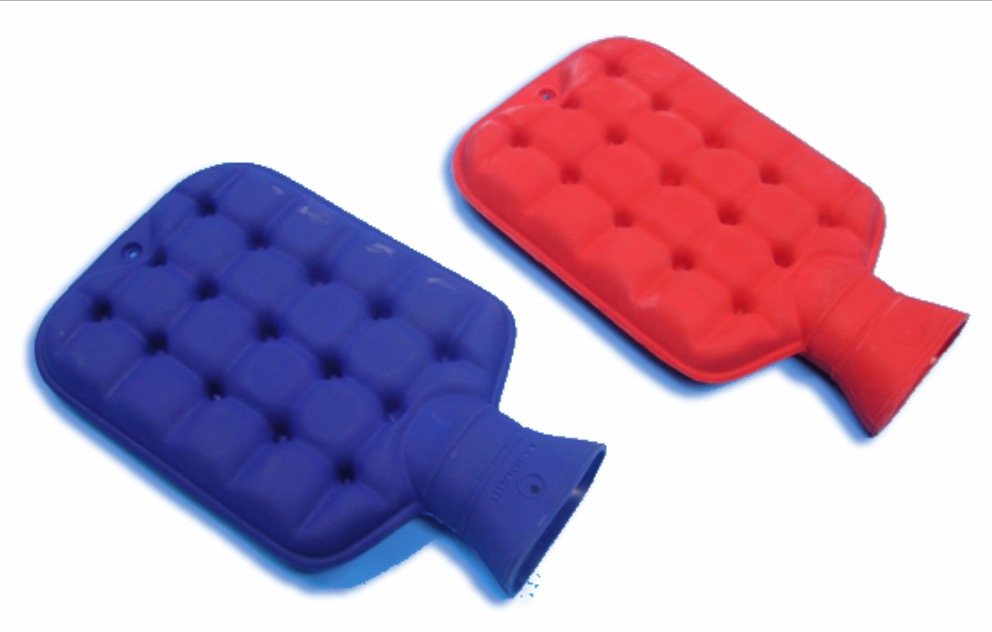
- electric or microwavable heating pad, hot water bottle, gell packs or hot water baths
- the heat should be warm, not too hot
Recommendation:
- don't apply it directly on skin, wrap the hot device in a thin towel 
- apply heat after using ice for the first 48 to 72 hours
- 10 to 15 minutes of heat are acceptable, with at least an hour in between 
- applying heat for too long can increase inflammation and pain
- don't use heat if you have diabeties or poor circulation and have open wound or stitches


Cold is generally used to treat acute or new injuries which cause inflammation and swelling. Cold slows down blood flow and circulation, reducing inflamation, pain such as sprains or strains and muscle spasm.
Applying:
- Ice or gel pack
Recommendation:
- it should be used if the area is swollen or bruised
- wrap ice or ice packs in a thin towel 
- use ice for the first 24 to 48 hours after an injury
- always use ice for around 10 to 20 minutes and then remove it for at least an hour before applying it again


The choice of heat or cold therapy should be based on patient and practitioner preferences and avaibility.

Monday, 30 November 2015

Abingdon Marathon 2015

Running season lasts from November until October. It always starts with cross country running and finishes with on or off road races of different distances. The most recognised distance for road running events are 10 kilometres, 10 miles, half marathons and marathons. 

This season I wanted to complete an ultra marathon, but I chose to run 3 marathons within 7 months instead. My personal best (PB) was 3hours 58 minutes and 54 seconds, which I accomplished at London Marathon. I wanted to improve my time so I signed up for a local event Abingdon Marathon. I started to train, but I found it hard to motivate myself because it didn't feel as challenging as the Ironman triathlon which I have considered as the biggest physical challenge. 

The Abingdon Marathon was first held in 1982 in Oxfordshire. The race date was 18th October 2015. That morning my boyfriend and I, we drove to Abingdon and around half way through we got a puncture. I was worried that I'm going to miss the race. My boyfriend changed the tyre very quickly and we carried on. Luckily we got there just in time. 


The race started at Tilsley Park athletic track and continued through the town centre, heading out on a two lap route through villages of Drayton, Milton and Sutton Courtenay and back through the town up to Tilsley Park and finished with a lap on the track. The course was flat and fast, ideal for achieving a personal best. The drink station was at every 4 miles and on every 8 miles they provided some sweets and bananas. 

The weather was perfect for running, dry and cloudy around 10 degrees. We set off at 9 am. There was around 1200 runners and a few of them were from Datchet Dashers running club. As I was approaching 5th mile, Rebecca from Datchet Dashers caught up with me and we ran along together. We have similar pace so it was good to support each other. I also spotted my boyfriend which was really nice. Rebecca was looking strong all the way. I tried to keep up with her but I couldn't. I started to loose her on 21st mile. I was pushing myself and felt exhausted and I couldn't wait to the finish. I was thinking to myself just last push and it will be over soon. I did it in 3 hours 57 minutes and 43 seconds which was my new personal best. I felt much better afterwards when I found out that with this race I won Berkshire County Championship in my age group. The hard work has definitely paid off!


Thank you to my boyfriend, my sister, family, relatives and Datchet Dashers for their support. 

Friday, 30 October 2015

Yoga

Yoga has become very popular and it increasing in popularity. For those who have never tried it yet I will explain what it is all about. One thing's for sure, it takes a long time to completely understand Yoga.


What is Yoga?

Yoga is a very old form of exercise originating in India about 5,000 years ago that focus on strength, flexibility, breathing and meditation practice of well being. The main factor are poses or postures called asanas which have specific physical benefits and create balance in the body. The poses can be done quickly to build heat in the body or more slowly to build stamina. 

There are so many different forms of yoga. Some are intense and fast, others are relaxing and gentle. 


A few examples of yoga forms:

Hatha - combines a series of basic movements with breathing

Vinyasa - a series of poses that flow smoothly into one another (also called Yoga Flow)

Power - fast and higher intensity practice that builds muscles 

Ashtanga - a series of poses combined with breathing techniques 

Bikram - a series of challenging poses performed in a heated room with high temperature (also known as Hot Yoga)

Iyengar - a type of yoga which uses props like blocks, straps or chairs to help your body to move into proper alignment 


Physical benefits of Yoga are:

- Flexibility
- Strength 
- Muscle tone
- Balance 
- Pain prevention 
- Joint health 
- Better breathing 


Mental benefits of yoga:

- Stress reduction (helping relieve stress)
- Mental calmness
- Body awareness (building self-confidence and improving posture)


Is yoga good for me?

Yoga is for everyone and you can tailor it to your individual needs. The good thing about yoga is that there are classes for every age group. You don't have to be fit to do yoga. You only need to be able to get up and down from the floor. 


How long does a yoga class last? 

Classes can have different durations. Typically a class lasts between 45 minutes to 1 hour and 30 minutes. If it's a longer class then you will have more time for learning breathing and relaxation techniques. It's worth speaking to a teacher about their approach before you sign up for a class. 


Enjoy! 

Tuesday, 1 September 2015

Tennis and golf ball self massage

Tennis and golf ball self massage

I've been running for a few years now and sometimes I got some pain and aches especially in my legs. Self massage could take care of the tightness that comes with day to day training or working more likely for people who sit a lot.


Here are some creative tips on using an ordinary tennis and golf ball:


Tennis ball has diameter of 67 mm

- It's good for calves, hamstring, hips & glutes, upper and lower back & neck.

- For hamstrings place the ball on a chair and sit on it. Then roll forward. You can also put the ball on the floor. This movement is good for calfs and lower back too.

- For hips and glutes put your body weight on the top of the tennis ball and knead it in circles.

- For upper back lean against the wall and move your self up and down and side to side.

- For neck you can use a chair that's high enough or the floor. Place the ball into groove between your spine and the side of your neck and work on both sides.


Golf ball has diameter of 42,7 mm

- It's good for hands, forearms and feet

- For hands and forearms this can be done in sitting or standing position. Rub and roll around.

- For feet (loosening up the plantar fascia) place the ball on the floor and roll around the problematic area. You can do this while sitting. If you need a little more pressure just stand up.


How long shall I do self massage for?

I would say not more then 10-15 minutes per day. Focus on spot which required attention then move on. Avoid already inflamed area as that can lead to longer recovery.

How hard I could go?

It's matter of easing up gradually rather then going hard. Build the pressure slowly like you would do a work out with warning up. Don't forget to check with your hands how your muscles are reacting during the massage. If any pain or injury it would be beneficial to see a professional massage therapists. The only way to progress is by listening to your body.